


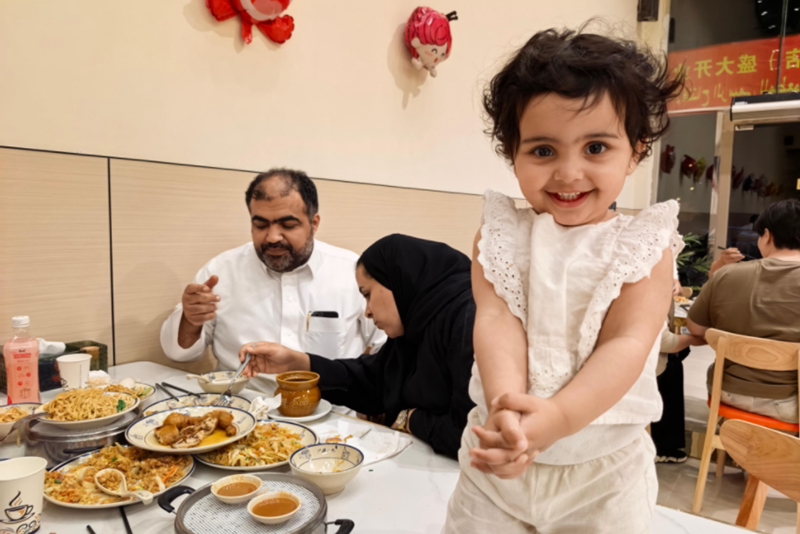
Local customers taste Shaxian snacks at Huang Qihe's shop in Saudi Arabia. [Photo by Zhang Shichao/for chinadaily.com.cn]
For Huang Qihe, a native of Shaxian county in Sanming, Fujian province, opening a Shaxian Snacks shop in Central Asia wasn't an impulsive decision. Rather, he hopes to use food as a bridge for bringing Chinese flavors to a new market.
The business idea came from a work trip he took last year. Huang spent months preparing his plans before he opened the shop at the end of July in Bishkek, the capital of Kyrgyzstan.
Since opening, many Chinese have visited looking for flavorful nostalgia. However, in Huang's view, Shaxian Snacks cannot sustain growth abroad relying solely on expat customers. Gaining recognition among locals holds the real key.
To adapt to the local market, Huang hired local staff and taught them how to make the Chinese snacks. He also rolled out beef and chicken wontons to cater to regional eating habits, winning a growing base of returning customers. There are plans to open a second shop in the city, but first, Huang is on a research trip in Xinjiang Uygur autonomous region and intends to set up a regional headquarters in Urumqi to cover the five Central Asian countries.
His venture abroad is not a one-person effort. He is supported by in-house operational and technical teams, alongside full-chain support from Shaxian Snacks Group covering ingredients, sauces, and store design. Huang's business model is being replicated in multiple markets, as the company exports its central‑kitchen operations and complete industrial chain model. Through trademark licensing partnerships, the group selects qualified local catering firms to advance the brand's international expansion and standardization.
Su Wei, director of the Shaxian Snacks Industry Service Center, said that as of September 2026, the brand has cooperated with 17 countries, including the United States, Japan, Australia, Portugal, France, Singapore, and Malaysia.
Su explained that the brand faces persistent challenges abroad, including malicious trademark squatting and copyright infringements. The legal systems vary greatly from country to country, and the cost of enforcing rights is high. Therefore, the international protection of brands still needs to be strengthened. Even so, he remains confident about Chinese cuisine's global prospects.
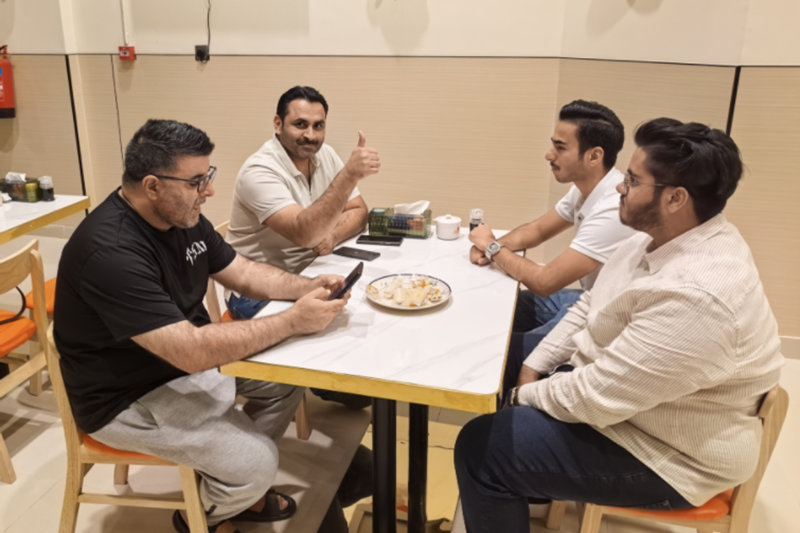
Customers give a thumbs-up at Huang Qihe's Shaxian Snacks shop in Saudi Arabia. [Photo provided to chinadaily.com.cn]

Copyright © General Office of Fujian Provincial People's Government
Website Identification Code 3500000049Registration Number: 15003084
All rights reserved. The content (including but not limited to text, photo, multimedia information, etc) published in this site belongs to fujian.gov.cn.
Without written authorization from fujian.gov.cn, such content shall not be republished or used in any form.
